
twists, tricks, and empathy in game narrative
sometimes, I think, I actually want to be a piece of food spat out from a throat.
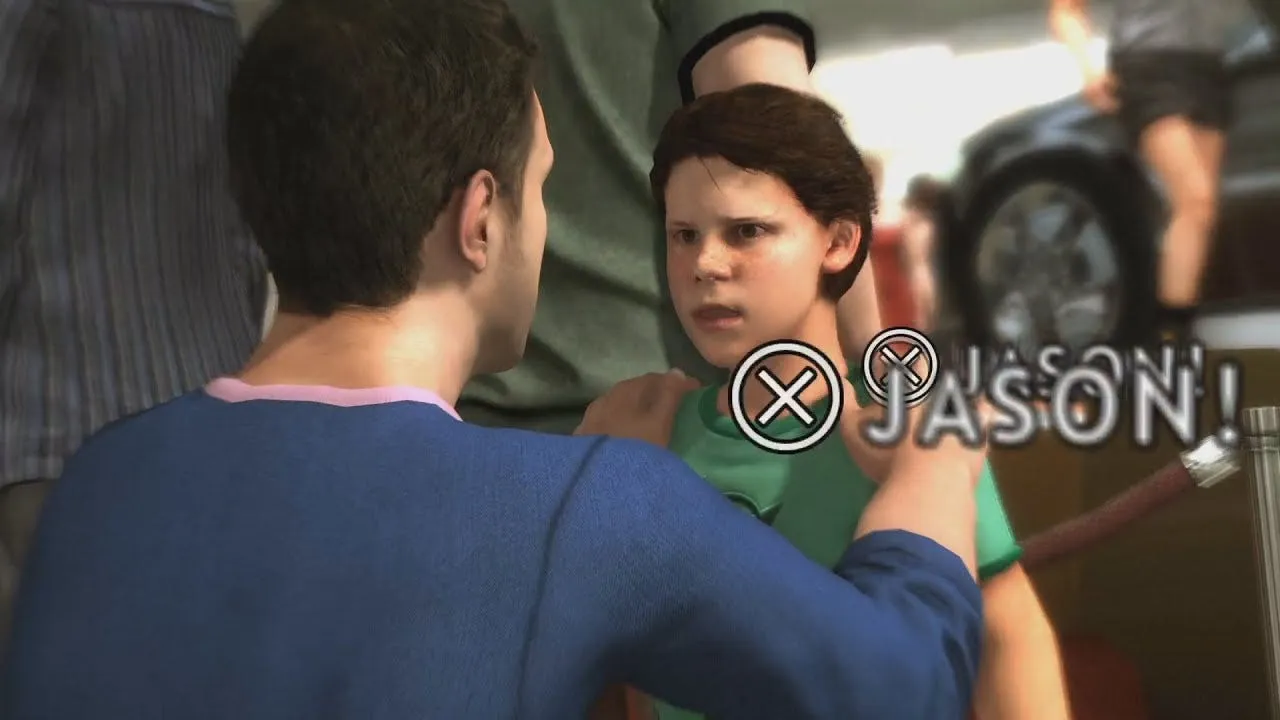
The following was originally published in The Game Narrative Kaleidoscope (ed. John Ingold).
In the history of game narrative, Quantic Dream’s Heavy Rain (2010) is often overlooked compared to other games of the same type — it was a Telltale-style game before the majority of Telltale’s best-remembered titles, even if its ambitions sometimes exceeded its execution.
There was one particularly controversial moment for many, where — late-game — one of the four main playable characters is revealed as the killer and kidnapper we have been hunting all along. The viscerally negative reaction many people have when I reveal that I actually like this reveal in certain respects? Follow the rabbit trail there and you’ll find something fundamental to what we care about when we’re controlling characters — something which might seem obvious, but which gets stranger and more specific, the more you compare such a reveal with other mediums.
At its heart, this reveal is a twist — not so different to the work of Agatha Christie and her reveals of narrators being killers all along. And when a twist lands in most storytelling forms, we take a backward look at the whole narrative experience prior to the reveal. We ask ourselves if it was an absence of information that led to our mistaken assumptions over whatever twist is occurring — if it is indeed a hole in the story, a negative space they knew we would fall into like a trap. If we were actively misled by the storyteller with incorrect information, then it’s more like we were pushed rather than tricked — the truth not only unguessable but actively warped.
Now, why is this a problem? Why does one route make us feel giddy and enjoy a story all the more, and the other can have us ‘nope’ out of the entire experience? After all, fiction is by its very nature already untrue. These events did not happen. But — and this is crucial — we don’t like to be reminded of this, do we? What we do in most stories is called ‘the suspension of disbelief’ — temporarily accepting untrue things as true, knowing it’s not real, because we have to do this to engage properly — to care about characters and sustain our empathetic imagination. To do otherwise is to be like the aliens of The Three-Body Problem, and declare that the television is lying to us.
To accept a twist based on our interpretation of incomplete information does not call into question reality itself, but knowledge. To the extent that we do think about being tricked, it’s a giddy kind of trick where the flourish and artistry makes us trust the trickster even more. But there’s a difference between tricking and cheating. For in being cheated, it’s far harder to recover, because we have the goop of actual falsehood in the same programming code that’s supposed to be generating our whole fictional dream. Fool me twice, shame on me — so I may as well distrust future information in the story, and there’s no plugging back into the Matrix.
Warning — we’re going to discuss the killer from Heavy Rain shortly, so if you’re not wanting to know the identity, please avert your eyes…
…
…
…
…
…
…
The Killer Revealed
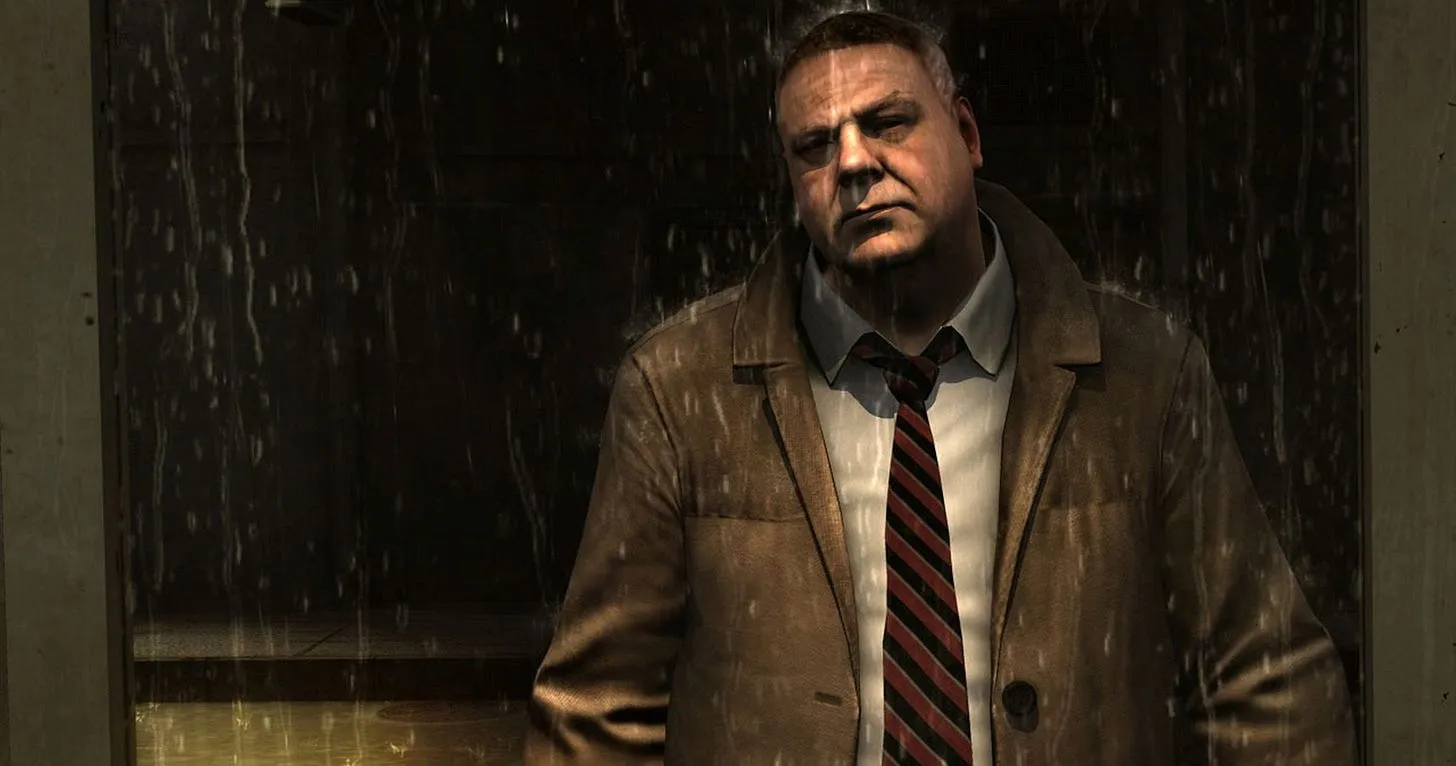
Now — through the norms of other fields — in Heavy Rain and its reveal of the killer, we’re still in ‘tricking’ rather than ‘cheating’ territory at least so much as it comes to the suspension of disbelief. It’s provable — the game could have had a cutscene with Shelby cackling like a villain at the start announcing his plan, and you could have left every other chapter exactly the same without contradiction. To replay the killer’s story is to see a man deceiving others yet capable of genuine care — because, as with many monsters, he is not a villain to himself.
But in choice-based games, we do more than suspend disbelief — we make active interventions in the fictional world. We play games for something qualitatively different than other mediums — not because games are ‘better’, but because sometimes we want this extra level of interaction and sometimes we do not. Poor completion rates prove most players never see all the branches, yet they’re satisfied — proof that satisfaction lies not in actual consequence but in the feeling of impact. We are not just looking for the ability to suspend disbelief, but the ability to feel like our interactivity is not pointless, or why else act?
We suspend the idea that we are not really the character we control (of course we are not), that we can choose anything we want (of course we cannot). But likewise, we know the experience was shaped for us and has limitations. We know there are hands pulling the strings — we do not believe our television screens are full of tiny people — but we also believe in those people, and pretend. Like a relationship both want to keep going but both know will end, we live in a dream of compatibility doomed to cease.
There are some questions that are key to the motivation for any task, as anyone suffering from burn-out will know: ‘What am I being asked to do, why am I doing it, how do I feel about doing it?’ We need to have a working idea of this to have the will to carry on doing it. This is crucial to the suspension of impotence — because — quite literally — we have to do things in games, and people won’t expend such active effort without a cause. Before people talk about the active nature of engagement in a film or a book, I am talking about activity quite literally here — pressing buttons and making overt decisions. Our sense of union with this character did not just arise by pretending they had reality, but through the moment-to-moment tasks of button-pressing and making choices to achieve these aims: evidence gathering, talking with witnesses, and other actions.
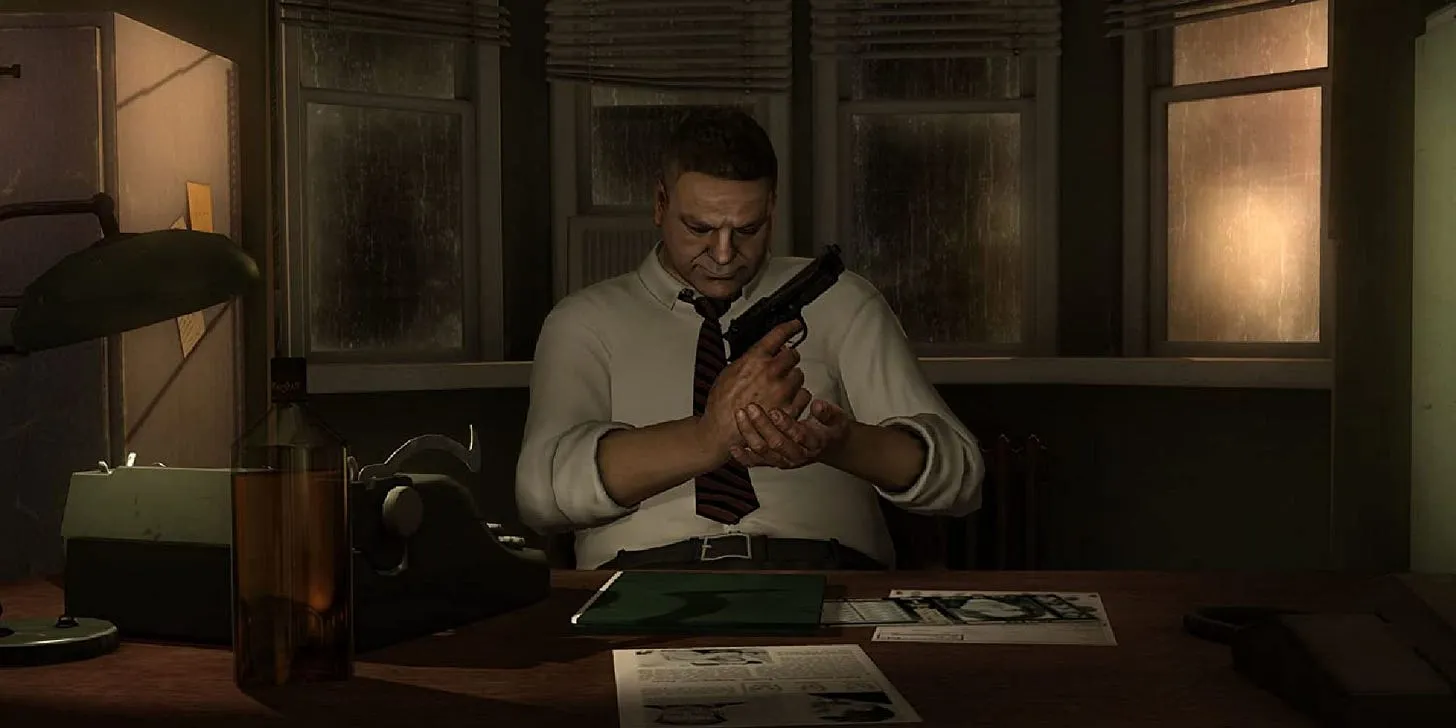
And it’s here — in the betrayal of the very literal job we thought we were being asked to do — that the sense of ‘cheating’ emerges in the Heavy Rain reveal. It would be one thing for both us and the character to have been lied to — the grease of amnesiac plotlines helping washing away the sins of so many beloved video games — but the character knew, and we did not, and yet we made choices about those very same things as if we were him.
The suspension of impotence requires that our answers to these questions not be lies. Just as we’d distrust future information after a narrative cheat in film, how can we trust the next instructions or maintain control? It raises the question of how in-control we ever really were, just as the story destabilises its own sense of truth. It’s like we are some ghost, exorcised by a holy rite, or a bad piece of food spat out from a throat.
Now — I admired the energy of Heavy Rain in trying this — the willingness to alienate and disrupt and make us feel uncomfortable and broken as players. Some of this is as a writer — if we know how such bonds are broken, we know how to play around with them in future, and how to forge and protect identification with playable characters all the better.
But… sometimes, I think, I actually want to be a piece of food spat out from a throat. What a miracle it is, how hard it is really and truly for any story to succeed in making anyone feel a strong feeling! We are on our long road to ‘games’ being viewed as capable of more emotions than just ‘fun’, and here, I think this strangeness is kind of cool. So — spit me, weird Heavy Rain twist. Spit me good.