writing and the danger of self-belief
are you really indifferent to what readers, audiences, and players might value?
My first thought was, he lied in every word
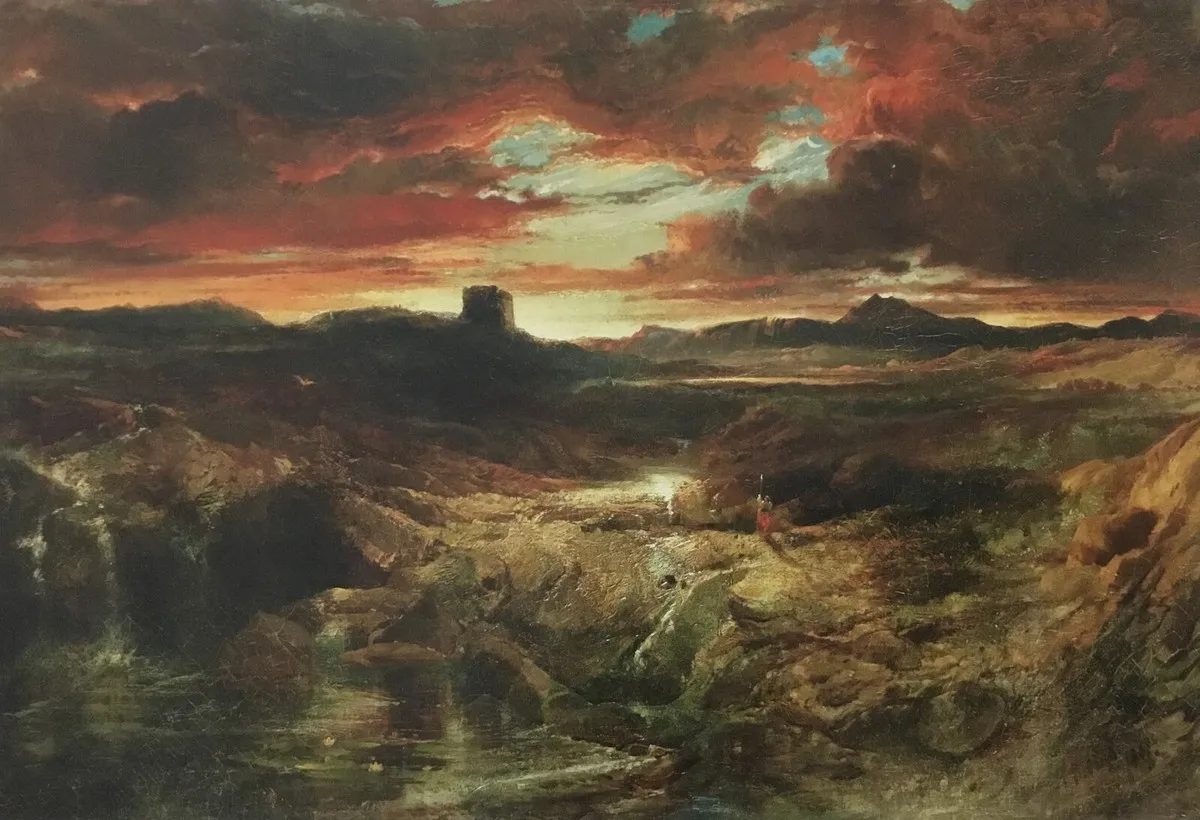
- ‘Childe Roland to the Dark Tower Came’, Robert Browning
Should we drink water? Of course!
Should we drink unlimited water?
No — we’d drown.
Should we believe in ourselves and be kind to ourselves? Of course!
Should we believe in ourselves and forgive ourselves to the extent we view criticism as an attack? That we never grow or apologise?
No — we’d lapse into narcissism, self-delusion, a lack of ambition.
It’s difficult, to have needs, behaviours, and values that require moderation rather than the logic of ‘either/or’.
For water, it’s easy — our body tells us, generally, when we’re harming it and when we need things. But for emotive, social, intellectual tasks, it’s far easier to misread and mistrust our own complex set of sensations and thoughts. It’s especially difficult for those experienced and battle-worn to help advise and prepare others for on the basis of their own experience — as judgement needs to grow for individuals based on real encounters and real mistakes, a willingness not only to judge yourself, but to forgive yourself, to consider what we owe others even as we protect ourselves from harm. It’s a constant struggle we can never fully get right and which cannot be fully judged on the basis of results, but of our intent, ethos, and willingness to change and/or stand. Much wisdom cannot be -known-, but -earned-.
So when it comes to writing — when we hear people talk about how creativity and intention are more important than anything else in the whole process? When we hear how X number of publishers or Y audiences did not see the greatness of people at the top of their fields who became bestsellers, and how carving their own path to something new was what led to success and happiness?
It’s music to the ears of aspiring writers at many levels. As with our other examples — it’s true — we need water, we need to believe in ourselves, we need to prize creativity and our own intentions in writing.
There’d be no problem with prizing intention and creativity above anything else — to seal ourselves off in silos of our own imagination — if we viewed ourselves as the only arbiters of the writing’s quality, if we truly weren’t bothered by others judging our work and not enjoying it as much as they might, if we are indifferent to the idea of an audience.
But are you really indifferent?
My first thought was, he lied in every word,
That hoary cripple, with malicious eye
Askance to watch the working of his lie
On mine, and mouth scarce able to afford
Suppression of the glee, that pursed and scored
Its edge, at one more victim gained thereby.
What else should he be set for, with his staff?
What, save to waylay with his lies, ensnare
All travellers who might find him posted there,
And ask the road? I guessed what skull-like laugh
Would break, what crutch ‘gin write my epitaph
For pastime in the dusty thoroughfare,- ‘Childe Roland to the Dark Tower Came’, Robert Browning
If you get upset at someone not enjoying your work, you value their opinion whether you want to or not. Some element of their response is considered a judgement or quality. Now — there’s a whole other lesson to be learned in terms of a -mass of feedback-, of not overly relying on individual readers, of finding the -right- audience for your work — but especially as writers are known to be sensitive creatures, how much are we really getting upset at -harshness-, versus being threatened by -any- suggestion that our work might be different?
Hegel’s theory of tragedy holds that something is tragic when it involves two ethical values we hold coming into conflict — a classic one being something like a duty to those you love VS a duty to your country.
I think there’s something inherently tragic about this same case: that we need to value our writing ourselves, and that we still care about (and infer value therefore) in the opinions of others.
Thesis: your individual creativity and intention matters more.
Antithesis: the expectation of your audience matters more.
Synthesis: both matter — greatness emerges in the overlap and realising there isn’t as much of a difference between these points as you might think.
Because despite seeming so contradictory in direction, where do you think your own judgements and creative opinions about narrative emerged as a writer, if not from your own experiences of others’ stories?
Our own ability to see our stories clearly is compromised through knowing far too much about its own creation and no longer experiencing the same suspense that others encountering it might have. But we -do- value that way of seeing stories -as- audiences, because every writer is an audience member for the writing of others, that same set of experiences that likely incited a wish to write in the first place. So the only way of accessing that kind of clarity is to seek the community and reception of others — to honour that same set of feelings.
The purity of our own creativity and intent can easily be swept away by chasing trends or overly focussing on the opinions of others, of trying to answer -all- feedback in -all- areas, of going too far the other way. There are risks — of course there are.
But we’re denying an essential part of our process — we’re making it so easy to lie to ourselves — if we make the idea of writing for -others- and considering their reception some kind of -allergy-. We don’t have to take the suggestions they give, of course we don’t — but the emotion and response around what they might say, that -something- isn’t working, can lead the inquisitive and self-challenging writer to create a better response than others might have thought of, to square the circle and find the overlap between the venn of what they intended and what others need.
Some writers have called storytelling a kind of archaeological dig — like Stephen King talking about digging up the dinosaur bones of an idea, almost, and trying not to break the bones as he brings it to life. Thinking on this and what we’ve been discussing, it reminds me of puzzles. Of that same kind of grid-search you might find at a dig-site, of thinking how things work together, of allowing yourself to pencil things in as you figure out the Sudoku of it all — knowing what you’re trying to do yourself, but bearing in mind the constraining reality of the grid, of all those entities around where you’re working. There’s no right answer in a singular sense, but I think there are often a -field of possible right answers- — not unlimited, not reachable by others who aren’t writing your work, but perhaps they can point the way.
Work for periods of time without thinking about the needs of others. Sometimes, work where you think about what you enjoy and don’t enjoy about the work of other writers — don’t let go of that, both in inspiration and in restraint. And share — be willing to see what others think, find trusted readers and players and other communities — be constructive, positive but challenging, to others when they ask for it, and return the same.
Learn when to trust your gut, as so many others have — learn the lessons of the times you didn’t, when you changed things you shouldn’t have changed, but never forget the wisdom gained of all those times you did listen, of every suggestion that made the difference. Be honest with yourself, even when it hurts. Build confidence that isn’t delusion, so that when you’re right, you finally truly feel you’re right to whatever extent you can, rather than just imagining it is so.
It’s dangerous to go alone, just as it’s dangerous to expect to be carried by others. Progress and clarity are not always possible — sometimes we step back — but fearing regression cannot stand in the way of progression.
Without change, there’s no story.
Not hear? when noise was everywhere! it tolled
Increasing like a bell. Names in my ears
Of all the lost adventurers my peers, — -
How such a one was strong, and such was bold,
And such was fortunate, yet, each of old
Lost, lost! one moment knelled the woe of years.
There they stood, ranged along the hill-sides, met
To view the last of me, a living frame
For one more picture! in a sheet of flame
I saw them and I knew them all. And yet
Dauntless the slug-horn to my lips I set,
And blew. “Childe Roland to the Dark Tower came.”- ‘Childe Roland to the Dark Tower Came’, Robert Browning